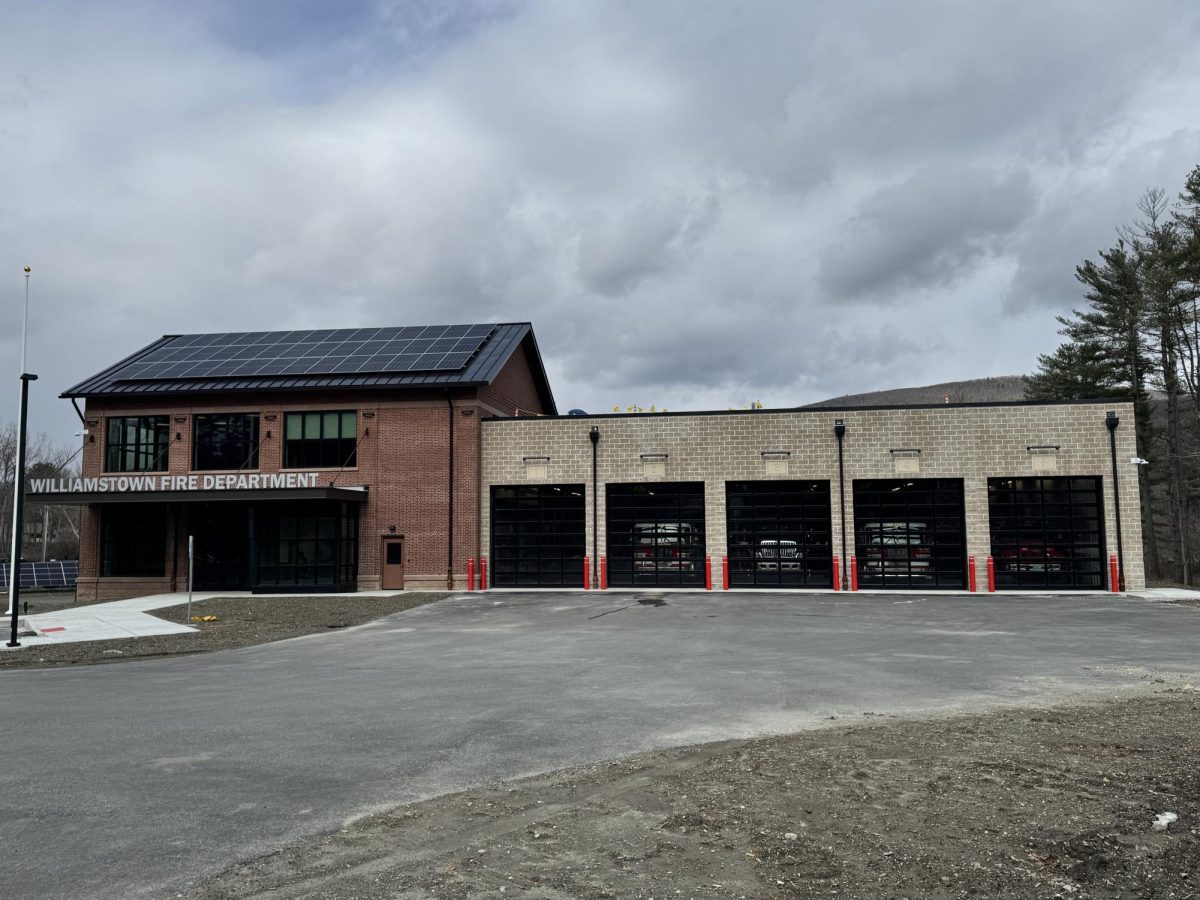
Williamstown has reached a major milestone with the new $22.5 million, 22,000 square-foot fire station on Main Street set to open this spring. The building replaces the 73-year-old Water Street station, a facility that firefighters had long outgrown.
Construction began in September 2022 under Consigli Construction. Because the Fire District had never borrowed money for a capital project before, the financing required careful planning and several rounds of public discussion. Williams College pledged $5 million toward the project, and the Clark Museum pledged $500,000, helping the district manage the remaining cost.
Fire Chief Jeffrey Dias said of the support: “Five and a half million dollars off of the total cost of the project takes so much off of the backs of the taxpayers. I can’t express my gratitude to both of those organizations for their pledge and their commitment to the safety of the community.”
For decades, the department worked in a building that did not meet modern standards. The old station did not have enough space for today’s fire engines, lacked a proper decontamination area, and forced turnout gear to be stored close to vehicle exhaust.
“The biggest benefit to this new fire station is the fact that we have laundry and showering facilities, because one of the things that we’ve learned over the last 15 to 20 years is that occurrences of firefighter cancer are much greater than in the average American … [The] best way [to reduce] that is to get people to shower immediately after they come back from a fire and to launder the protective clothing that we wear right after a fire,” said Dias. “Our breathing apparatus used to have to be cleaned out on a concrete floor that the trucks parked on, and the face pieces … were cleaned in the kitchen sink. There were no proper facilities to clean, decontaminate, or prepare any of our equipment.”
One of the most notable features of the project is its environmental design. The station is Williamstown’s first, major municipal building built to achieve net zero carbon emissions. Photovoltaic (solar) panels will be installed on the roof and on ground-mounted arrays to generate electricity. These panels convert sunlight directly into electricity using semiconductor materials, which will provide energy for the facility without harming the environment. Electric heating and cooling systems will replace fossil fuel-based equipment.
“The amount of energy that they generate should offset the electricity that we’re using,” explained Dias. “There’s no fossil fuels in the building, there’s no natural gas, there’s no oil burners. Everything we have is electric. There’s no carbon footprint.”
Beyond supporting the fire department, the new station is expected to benefit the wider community. The building includes meeting space for public events and safety programs, and its updated layout supports faster and more efficient emergency response. The fire department hopes that the new station will help bring the community together.
Dias said, “[The new station is] going to make it a lot easier to connect with the community on a more personal level. I’m working on, hopefully next year, starting a junior firefighter program. We don’t have enough young people who strive to be firefighters, and a junior fire program really exposes people to all the wonders that being a firefighter is all about. I’ve been doing this job for 28 years now, and I love it as much today as the day that I walked in the door … There are a lot of people who don’t realize … just how rewarding it is.”