


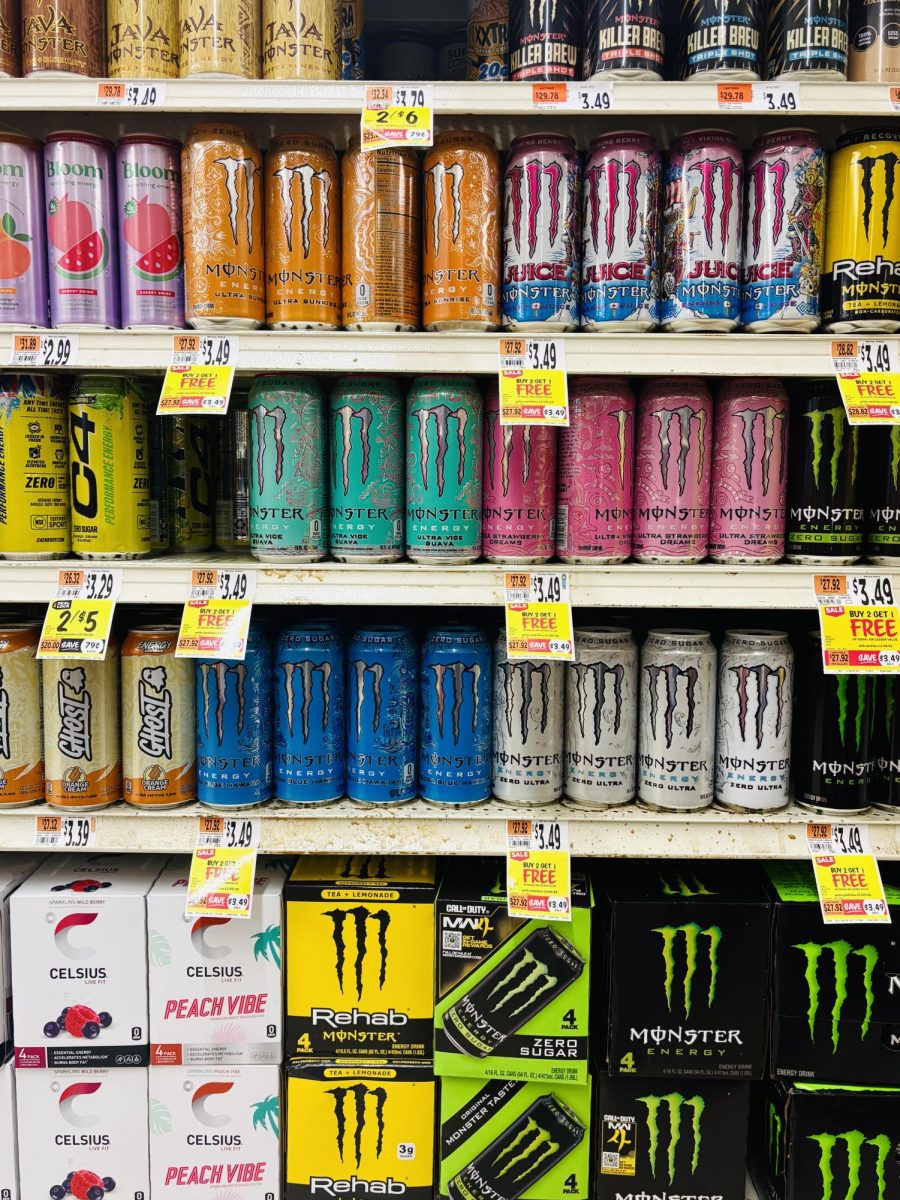
At Mount Greylock, energy drinks have been growing steadily in popularity. In recent years, they have gone from relatively rare among students to being a widespread phenomenon.
Opinions on energy drinks are varied. According to biology teacher Sarah Holmes, they “kind of have a place, but they are more detrimental for high schoolers.” Holmes believes that while energy drinks do help focus and get people through the day, they are unhealthy if consumed often. She says that energy drinks “are inhibiting the signals that tell you that you are tired,” meaning that even though the body needs sleep, energy drinks convince the body that it doesn’t. However, functions of the body can still fail, since energy drinks don’t actually replace sleep, they just make you think they do. Eighth-grade student Claire Wakoff completed a project on them last year, concluding that “for people under the age of 18, it can really hurt brain development” and that young people are “very susceptible to addiction.” But Wakoff also mentioned that drinking energy drinks “are not bad for learning” and that “it even helps.” In addition, she stated that “they are delicious.” This is a possible reason why they are so popular across the student body.
It is not just the caffeine that is unhealthy in energy drinks. There are large amounts of sugar in many as well. According to the government, Monster Energy drinks contain 54 grams of sugar. In comparison, according to the official Hershey’s website, one king-size Hershey’s bar contains 52 grams of sugar. So, drinking a Monster energy drink every day is, in terms of sugar, essentially equivalent to eating one king-sized candy bar every day. Monster does not even have the highest amount of sugar for energy drinks on the market. Mountain Dew contains 61 grams of sugar, while Rockstar contains 62 grams. Holmes claims that this, combined with the caffeine intake, can lead to cardiac issues.
Junior Charlie Della Roca is a regular drinker of energy drinks, consuming around three to four per week. Della Roca likes that “they give [her] an energy boost that is not coffee.” Many people dislike the taste of coffee, and as Wakoff said, the drinks often taste very good. Della Roca believes that they are unhelpful for testing but are beneficial in regular classes, as they increase focus. She noted that she has been influenced by the recent trend to buy more and different flavors. Furthermore, Della Roca estimates that they are “pretty widespread … in high school, especially girls. More than half of the student body drinks energy drinks at least once a week.”
Energy drinks improve students’ ability to focus, although they are unhealthy unless consumed in small amounts. These relatively new, popular drinks are harmful to health but could be beneficial to learning and focus. Despite the attractive short-term benefits and enticing flavors, Della Roca stated that “[she] wouldn’t recommend drinking energy drinks that are addictive and have more caffeine than you really need.”